

Your nose manages several complex roles beyond standard respiration. This vital organ traps airborne debris, controls humidity, and preserves olfactory sharpness. Central to these functions is the nasal septum, a delicate osteocartilaginous wall that divides both nasal cavities. When the nasal septum is straight, respiratory airflow remains balanced and clear. But if it deviates from the midline, a pathology termed a deviated septum, it often sparks chronic discomfort and sinus complications.
Exploring the Pathology of a Deviated Septum
A deviated septum occurs when the central osteocartilaginous wall tilts toward one side, restricting an internal nasal airway. While certain patients present with congenital septal deviation, others acquire the condition secondary to physical nasal trauma. In subtle clinical cases, the deviation is minimal and generates no perceptible breathing difficulty. But marked anatomical deviations disrupt normal ventilation and sinus ventilation, resulting in long-term complications.
Standard contributing causes of a deviated septum include:
- Congenital developmental anomalies
- Traumatic nasal fractures from sports activities or motor vehicle accidents
- Structural collapse or unintended movement from earlier nasal surgeries
When left unaddressed, this mechanical obstruction drives chronic airway complaints, recurrent sinus disease, and fractured sleep patterns.
Identifying Common Signs of a Deviated Septum
Having an off-center septum does not universally cause overt problems. When functional complications appear, the clinical signs typically include:
- Continuous Nasal Congestion: Having one side of the nose consistently obstructed, particularly at night or during peak pollen seasons, often points to a deviated septum.
- Persistent Epistaxis Events: Uneven respiratory currents strip moisture from the nasal lining, predisposing patients to recurrent nosebleeds.
- Persistent Sinusitis Episodes: Obstructed paranasal drainage traps fluid and pathogens, causing chronic or recurring sinus infections.
- Aching Headaches and Midface Pressure: Disrupted nasal aeration increases sinus pressure, causing persistent headaches and discomfort surrounding the cheeks and eyes.
- Posterior Pharyngeal Drainage: Inadequately cleared nasal fluid drips down the posterior throat, stimulating repetitive throat clearing and chronic cough.
- Snoring and Sleep Disturbance: A narrowed nasal passage can lead to loud breathing, snoring, or even obstructive sleep apnea.
- Noticeable or Impaired Nasal Breathing: Structural obstruction turns more prominent throughout aerobic exercise and sleep cycles.
- Reduced Sense of Smell: Changes in airflow and chronic congestion can affect your ability to detect odors.
Diagnosing a deviated septum
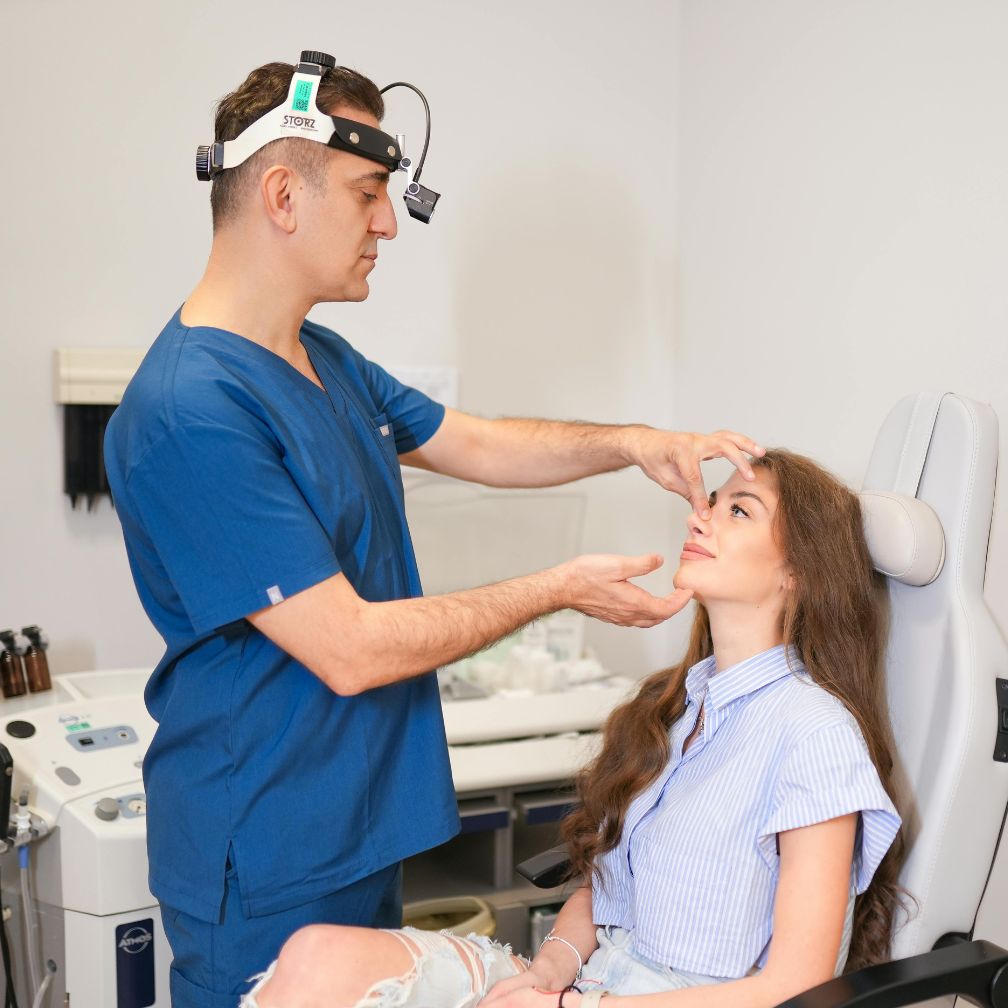
If you endure these clinical symptoms chronically, scheduling an evaluation with an ear, nose, and throat (ENT) specialist is essential. Your ENT will start by asking about your symptoms, medical history, and any past nasal injuries.
A careful structural examination forms the baseline of the appointment. Employing targeted illumination and a sterile speculum, your clinician examines internal nasal symmetry and mucosal health.
To corroborate the diagnosis or exclude alternative pathologies, your ENT may suggest:
- Precision Nasal Endoscopy: A fine endoscope with advanced optics displays high-detail views of deep nasal passages and septal walls.
- Maxillofacial CT Scans: Detailed radiographic imaging visualizes deep bony anatomy, confirming septal spurs and associated ostiomeatal obstruction.
- Comprehensive Allergy Panels: Ruling out environmental allergies through specialized testing ensures accurate differentiation from mechanical deviation.
Restoring Airflow: Treating a Deviated Septum
Promisingly, clinicians offer diverse conservative and operative treatments to manage or correct a deviated septum effectively.
Medical Non-Surgical Options
- Intranasal Corticosteroids and Decongestant Sprays: These medical therapies shrink inflamed nasal turbinates for improved breathing, leaving the structural deviation intact.
- Nasal Valve Dilator Strips: Widely used overnight to reduce nasal valve collapse and support nighttime breathing.
- Allergy Desensitization and Control: Addressing underlying allergic inflammation improves overall nasal patency and patient comfort.
Surgical Correction Options
- Septoplasty: A surgical procedure that repositions and straightens the septum to restore proper airflow.
- Rhinoplasty (if needed): Often performed alongside septoplasty to improve nasal appearance or correct structural damage.
- Turbinate Reduction: Enlarged turbinates (tissue structures inside the nose) may be reduced to enhance airflow.
Clinical Indications for Visiting an ENT Specialist
A deviated nasal septum is never just a simple inconvenience, as it poses substantial challenges to your daily health and comfort. If you’re dealing with persistent nasal issues, don’t wait for them to worsen.