

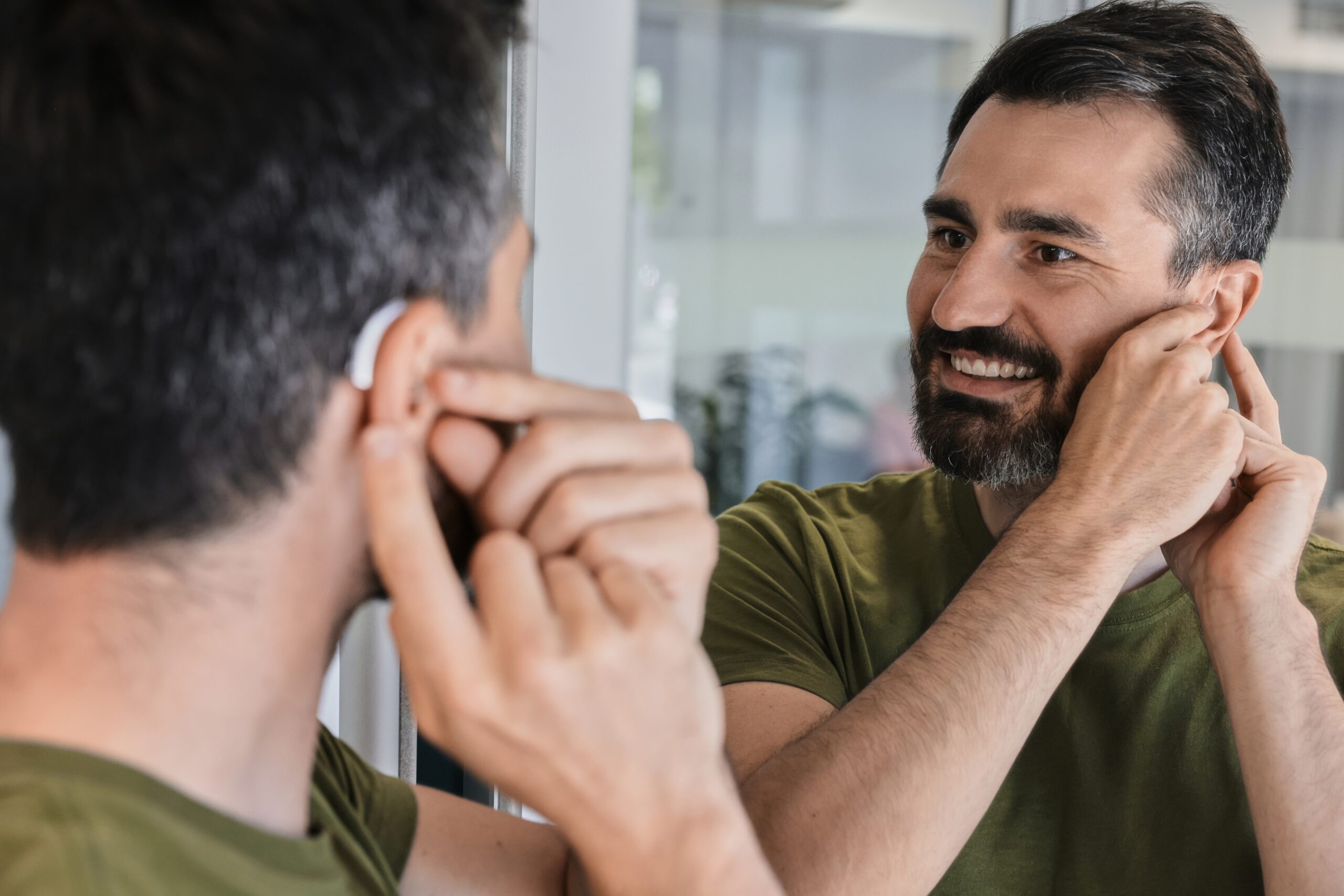
Following dinner conversations becomes challenging when high ambient noise interferes with your focus and hearing. Our specialists can evaluate hearing under both calm and noisy listening conditions to establish why noisy rooms present such difficulty. When we isolate the root mechanism behind your difficult hearing, we guide you toward customized communication solutions.
Explaining Normal Quiet Hearing Versus Restaurant Listening Fatigue
A tranquil environment produces a beneficial signal-to-noise ratio where spoken dialogue easily overpowers weak ambient noise. Dining venues establish an entirely contrary auditory challenge. Multiple voices, music, kitchen noise, and reverberation overlap with speech, forcing the ears and brain to work harder to separate the person you want to hear.
These communication barriers frequently indicate high-frequency hearing loss, central auditory-processing disorders, or age-related sensorineural changes. Visual limitations from low lighting, cognitive fatigue, and sitting farther away from conversational partners amplify speech degradation. Certain patients demonstrate normal sensitivity on routine audiograms while struggling significantly during advanced speech-in-noise testing. Consistent difficulty following restaurant conversation warrants clinical investigation even when everyday hearing seems largely unaffected.
Clinical Evaluation of High-Frequency Hearing Loss
Diagnostic assessment begins by documenting specific listening breakdowns, recreational noise exposure, tinnitus symptoms, medications, and hereditary auditory patterns.
Diagnostic pure-tone audiometry establishes the softest auditory thresholds you can perceive across standardized frequencies via air and bone conduction pathways. High-frequency hearing loss commonly presents on the audiogram as a characteristic precipitous drop in the higher frequency ranges. Comprehensive evaluations frequently include impedance tympanometry to examine middle-ear function and recorded word-recognition testing to measure speech understanding.
Standard quiet test booths fail to simulate real-world restaurant noise, making speech-in-noise testing a crucial clinical tool. It calculates your ability to identify verbal phrases as competing background noise levels rise. Collectively, these evaluations clarify if your challenges relate to raw audibility, phonetic clarity, signal-to-noise processing, or compound factors.
How Auditory Processing Difficulties Impact Adult Hearing
A central auditory processing disorder disrupts the neurological transmission and cognitive interpretation of sound waves. A patient’s ears may demonstrate normal pure-tone sensitivity, but their central processing system struggles to separate background babble, distinguish consonant sounds, or follow swift discussions. We prioritize assessing peripheral auditory acuity before recommending an in-depth central auditory-processing assessment or external medical referrals.
How to Improve Speech Clarity in Challenging Acoustic Environments
Minor environmental adjustments can boost speech acoustic signals and supply critical visual lip-reading cues. Before dining out, choose a quieter restaurant or visit during an off-peak time. Restaurants featuring plush booths, wall acoustic panels, heavy drapery, carpeting, and sound-dampening materials provide superior listening compared to open rooms with reflective surfaces.
In-venue communication guidelines:
- Select a secluded table situated away from prep kitchens, crowded bar stations, loudspeaker zones, and large parties.
- Position yourself with your back toward a solid partition to dampen intrusive background noise from behind.
- Ensure you sit directly across from speaking partners in an area with sufficient illumination for visual lip-reading.
- Keep conversational proximity as close as comfortably feasible to preserve acoustic signal strength.
- Orient your stronger ear toward the key person you want to follow in conversation.
- Encourage speakers to rephrase key information rather than simply repeating unparsed words louder.
- Actively confirm key information rather than smiling and guessing at ambiguous dialogue.
- Step away for a brief auditory rest when cognitive listening fatigue begins to set in.
- Request that friends speak with crisp clarity rather than speeding through dialogue.
- Speaking with excessive volume creates acoustic distortion that fails to make words clearer.
What Are the Best Tools for Hearing with Background Noise?
Selecting the ideal assistive technology depends upon underlying diagnosis, specific acoustic challenges, and verified hearing loss. Professionally fitted hearing aids may use directional microphones, digital noise reduction, and dedicated restaurant programs to emphasize speech from the front and reduce some competing sound. Patients must uphold realistic expectations because modern amplification cannot strip out every ambient human voice completely.
A remote microphone can provide a stronger improvement in the signal-to-noise ratio. The remote unit is attached to the speaker’s clothing or placed nearby, transmitting that voice straight into compatible hearing aids or an audio receiver. By streaming directly, this technology overcomes acoustic falloff from distance and surrounding environmental noise.
Supplementary auditory solutions include:
- Omnidirectional table microphones designed for group dining tables
- Hearing-loop telecoils that stream clean audio in loop-equipped establishments
- Smartphone speech-to-text or live-captioning applications
- Modern wireless hearables delivering directional beamforming and sound enhancement
- Acoustic sound-meter apps and dining review directories that score restaurant noise
Our audiology staff helps you evaluate options, ensures wireless compatibility, and trains you on operating your chosen equipment.
The Clinical Role of Audiologists in Managing Loud Environments
Undergoing a formal hearing evaluation takes your care beyond the limited baseline of hearing adequately in quiet spaces. We examine the challenging acoustic venues, conversational setups, and noise profiles you encounter to select appropriate diagnostic tests. Testing routinely combines pure-tone audiometry, middle-ear impedance tests, speech discrimination, and speech-in-noise measures. Specialized auditory-processing testing can be ordered when patient history and preliminary audiometric findings warrant deeper neural investigation.
Sudden unilateral hearing drops, acute asymmetric changes, or rapid auditory decline mandate evaluation by an ear, nose, and throat physician. Individualized diagnostic care pinpoints the precise physiological etiology rather than merely blaming restaurant noise for communication struggles.
Schedule a Hearing Evaluation Today
If struggling through dinner conversation leaves you mentally exhausted, detached, or constantly guessing, schedule a complete hearing evaluation with our clinic. We can explore ways to help with hearing in noisy environments with hearing-aid adjustments, assistive tools, or rehabilitation options that may fit your needs.
Connect with us today to arrange your clinical visit and take the first step toward clearer, easier dining communication.